Your Zone 6b raised-bed garden plan
A 4'x8' Boston-area bed, six crops, full sun — planted in May and producing through October.
- Zone
- 6b
- Average last frost
- May
- Average first frost
- October
- Plot
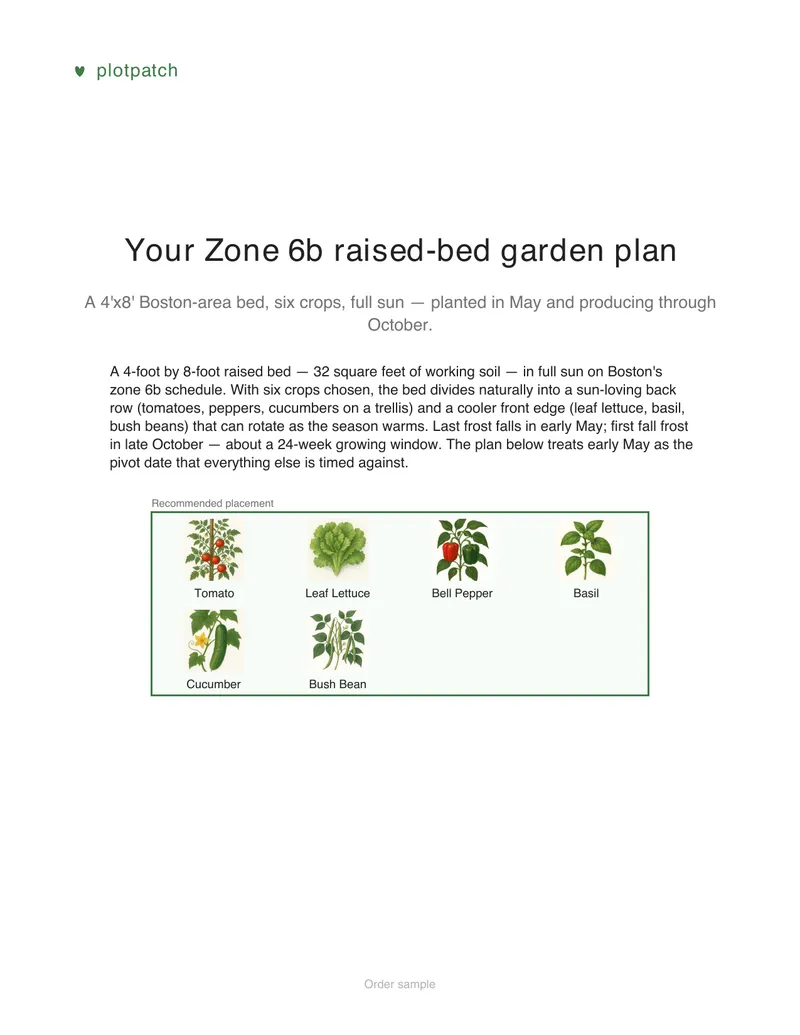
- A 4-foot by 8-foot raised bed — 32 square feet of working soil — in full sun on Boston's zone 6b schedule. With six crops chosen, the bed divides naturally into a sun-loving back row (tomatoes, peppers, cucumbers on a trellis) and a cooler front edge (leaf lettuce, basil, bush beans) that can rotate as the season warms. Last frost falls in early May; first fall frost in late October — about a 24-week growing window. The plan below treats early May as the pivot date that everything else is timed against.
Crops
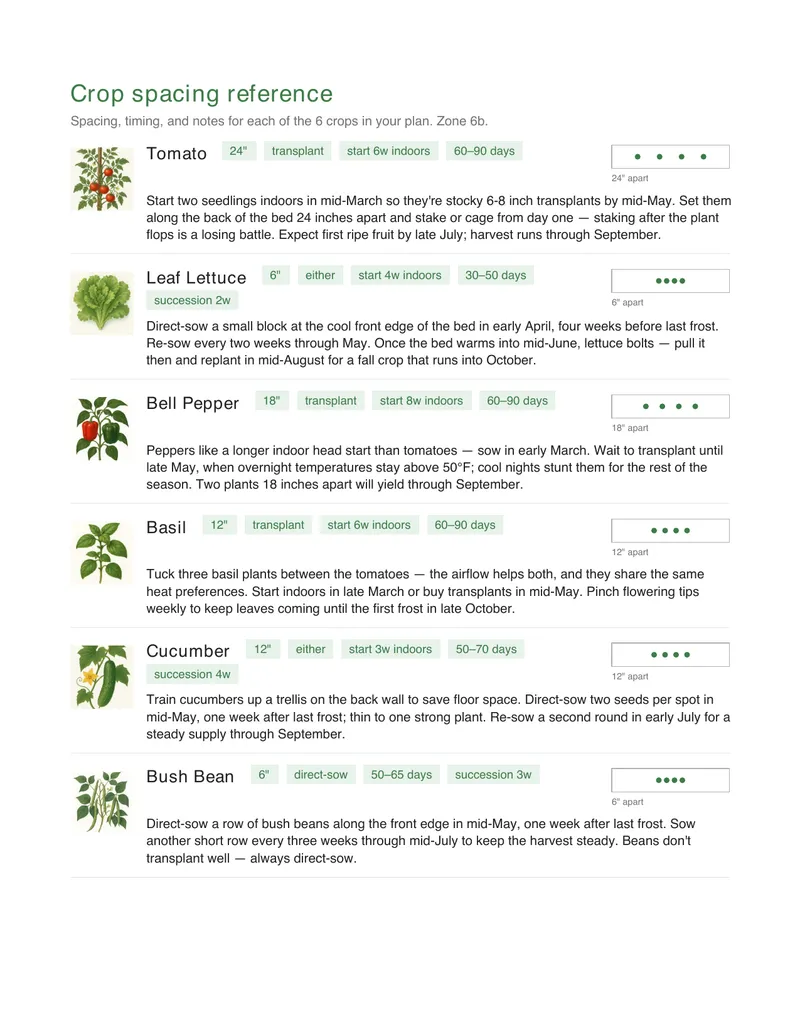
- Tomato24" spacing60–90 days to maturitytransplant
Start indoors 6 weeks before last frost.
Start two seedlings indoors in mid-March so they're stocky 6-8 inch transplants by mid-May. Set them along the back of the bed 24 inches apart and stake or cage from day one — staking after the plant flops is a losing battle. Expect first ripe fruit by late July; harvest runs through September.
- Leaf Lettuce6" spacing30–50 days to maturitytransplant or direct sowsuccession every 2 weeks
Start indoors 4 weeks before last frost.
Direct sow -4 weeks after last frost.
Direct-sow a small block at the cool front edge of the bed in early April, four weeks before last frost. Re-sow every two weeks through May. Once the bed warms into mid-June, lettuce bolts — pull it then and replant in mid-August for a fall crop that runs into October.
- Bell Pepper18" spacing60–90 days to maturitytransplant
Start indoors 8 weeks before last frost.
Peppers like a longer indoor head start than tomatoes — sow in early March. Wait to transplant until late May, when overnight temperatures stay above 50°F; cool nights stunt them for the rest of the season. Two plants 18 inches apart will yield through September.
- Basil12" spacing60–90 days to maturitytransplant
Start indoors 6 weeks before last frost.
Direct sow 2 weeks after last frost.
Tuck three basil plants between the tomatoes — the airflow helps both, and they share the same heat preferences. Start indoors in late March or buy transplants in mid-May. Pinch flowering tips weekly to keep leaves coming until the first frost in late October.
- Cucumber12" spacing50–70 days to maturitytransplant or direct sowsuccession every 4 weeks
Start indoors 3 weeks before last frost.
Direct sow 1 weeks after last frost.
Train cucumbers up a trellis on the back wall to save floor space. Direct-sow two seeds per spot in mid-May, one week after last frost; thin to one strong plant. Re-sow a second round in early July for a steady supply through September.
- Bush Bean6" spacing50–65 days to maturitydirect sowsuccession every 3 weeks
Direct sow 1 weeks after last frost.
Direct-sow a row of bush beans along the front edge in mid-May, one week after last frost. Sow another short row every three weeks through mid-July to keep the harvest steady. Beans don't transplant well — always direct-sow.
Month-by-month calendar
March
- Order seeds and check transplant dates against your last-frost target of early May.
- Start tomato seedlings indoors mid-month under a south window or grow light.
- Start pepper seedlings indoors early in the month — they need the longest head start.
April
- Direct-sow leaf lettuce in the front of the bed at the start of the month.
- Start basil indoors in the last week of the month.
- Top-dress the bed with two inches of finished compost and rake smooth.
May
- First week: harden off tomato and pepper seedlings — a few hours outside each day, increasing.
- After last frost (early May): transplant tomatoes 24 inches apart along the back. Stake them.
- Mid-May: direct-sow cucumbers at the trellis and bush beans along the front.
- Late May: transplant peppers and basil once nights stay above 50°F.
- Re-sow leaf lettuce one more time before the bed warms.
June
- Mulch the bed with 1-2 inches of straw or shredded leaves to hold soil moisture.
- Train cucumbers up the trellis; tie tomato leaders to stakes weekly.
- Pull bolting lettuce and let the space rest for a fall replant.
- Begin bush bean harvest at the end of the month.
July
- Pinch basil flowering tips and harvest weekly.
- First ripe tomatoes appear late month — harvest at full color.
- Re-sow cucumbers for a second wave.
- Sow another short row of bush beans by mid-month.
August
- Peak harvest — tomatoes, peppers, cucumbers, beans all producing.
- Mid-month: direct-sow leaf lettuce again for a fall crop.
- Watch for tomato hornworms; remove by hand.
- Side-dress tomatoes and peppers with a thin compost layer.
September
- Continue picking tomatoes and peppers; pull bean plants once they slow.
- Lettuce from the August sowing is ready for first cuts.
- Pinch basil aggressively — the plants try to flower as nights cool.
- Cucumber vines wind down; pull when production stops.
October
- Harvest remaining peppers and green tomatoes before first frost (late month).
- Pull tomato cages, stake them, and clean for next year.
- Top-dress the empty bed with two inches of compost and cover with shredded leaves.
- Lettuce keeps producing under a row cover into November.
November
- Final lettuce harvest before hard freeze.
- Pull row cover, store for next year, and let the bed rest under its leaf mulch.
Watering
A raised bed dries faster than in-ground soil. Plan on a deep soak twice a week during the growing season, more often during a heat wave. The goal is one inch of water per week — a finger pushed two inches into the soil should still feel cool and slightly damp. Water at the base of plants in the morning so leaves dry before evening; wet foliage overnight invites disease. Mulch holds moisture and cuts watering frequency by about a third.
Fertilizing
Start the season with a 2-inch top-dress of finished compost worked into the surface. That feeds light feeders (lettuce, basil, beans) for the whole season. Heavy feeders — tomatoes and peppers — appreciate a side-dress of compost or a balanced slow-release organic fertilizer at transplant and again when fruit set begins in early July. Avoid high-nitrogen feeds on tomatoes once they flower; you'll get lush leaves and fewer fruits. Beans fix their own nitrogen and need nothing extra.
Succession
Succession is what turns a small bed into a long-yielding plot. Re-sow leaf lettuce every two weeks from early April through late May, then again starting mid-August through September for a fall harvest that runs into October under a row cover. Re-sow bush beans every three weeks from mid-May through mid-July; the late sowings produce right up to first frost. Cucumbers benefit from a second sowing in early July to replace the spring vines as they fade in late August. Tomatoes, peppers, and basil are single-planting crops in this zone — one round set in late May produces through October.
Pests
Boston-area beds see three reliable visitors. Tomato hornworms appear in July; check undersides of leaves weekly and pick off by hand. Cucumber beetles cluster on young vines — a lightweight row cover until flowering keeps them off. Slugs love wet lettuce — an evening pass with a flashlight after rain is the most effective control, plus keeping mulch a few inches away from the base of plants. Companion planting helps the bed stay balanced: basil among the tomatoes, beans away from the onions and chives. Skip chemical sprays in a small bed — they hit the pollinators you want, too.
From your plan’s author
Six crops in 32 square feet is plenty for a second-year gardener. Print this plan, hang it near the back door, and check off each month as it arrives — the bed will pay you back through October. If something underperforms, write a note in the margin: that's how next year's plan gets sharper.